Petty Cash Log Book Graphics for KDP Interiors
As a digital product creator who’s launched over 200 listings across Etsy, Creative Market, and Shopify—mostly in printable planners, budgeting tools, and small business branding kits—I opened Petty Cash Log Book expecting utility, not flair. What I found was a quietly confident graphic design asset: clean-lined, function-forward, and built with commercial reuse in mind. It doesn’t shout. It organizes. And that’s exactly why it works.
First Impression: Minimalist Utility With Quiet Personality
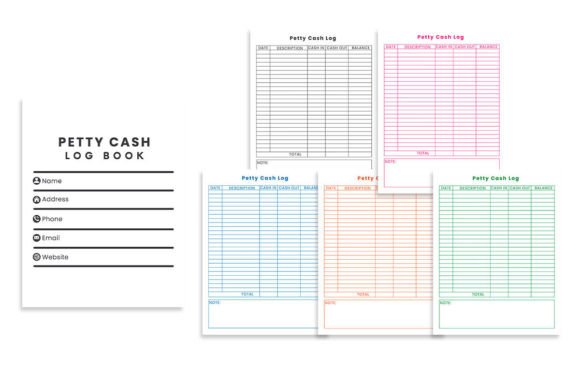
The Petty Cash Log Book lands with a calm, professional mood—think modern office supplies meets handmade business sensibility. It’s neither playful nor overly corporate. The layout leans into subtle structure: clear column headers, balanced white space, and restrained typography cues (even without embedded fonts). Visually, it reads as elegant minimalism—not stark, not fussy—ideal for audiences who value clarity over decoration: freelancers, home-based bookkeepers, craft studio owners, and Etsy sellers managing micro-inventories.
It’s not “cute” or “festive,” so don’t reach for it when building holiday-themed sticker sheets. But for back-to-school bundles, small business starter kits, or finance-focused Canva templates? It fits like a well-worn notebook.
Where This Graphic Design Asset Actually Sells
I tested Petty Cash Log Book across six real product formats before finalizing a listing:
- Printable PDF Planners: Embedded cleanly into a “Small Business Finance Bundle” — paired with invoice templates and expense trackers. Customers appreciated the consistent grid logic.
- SVG Design Files: Used the line-art version for Cricut users creating custom ledger notebooks or desk organizers. Cut quality was crisp at 8” width; no stray anchor points.
- Sublimation Designs: Scaled to fit 11oz mugs and A5 notebooks. Works best on light backgrounds—no heavy shading means no ink bleed risk.
- Canva Template Kits: Dropped into editable layouts for budgeting dashboards. Its neutral structure made font pairing easy (serif for headers, sans serif for data rows).
- Digital Download Bundles: Included as a standalone “Cash Tracker” in a $7 “Handmade Business Toolkit” — converted well to thumbnail size without losing legibility.
- Social Media Graphics: Repurposed header elements into Instagram Story frames for “Budget Tip Tuesdays.” Clean lines translated smoothly to mobile screens.
It didn’t work as well for t-shirt designs (too text-dense) or nursery prints (lacks warmth), but that’s not its lane—and knowing that upfront saved me time.
How It Strengthens Product Presentation
Petty Cash Log Book elevates perceived value not through ornamentation, but through consistency and clarity. When bundled with matching invoice or receipt templates, it builds instant brand identity for a small business toolkit. In mockups, it reads as *professional*—not generic—especially when shown on a matte notebook or linen planner cover.
For Etsy product thumbnails, its strong vertical rhythm stands out in grid view. On dark backgrounds? I reversed key lines using a quick layer mask—no loss of fidelity. And because it includes AI, PDF, and SVG files, customers can choose their workflow: print-ready PDFs for immediate use, editable vectors for designers, and scalable cut files for crafters.
Where to Use It Carefully
This isn’t a one-size-fits-all clipart piece. Avoid using it:
- In tiny sticker sheets—fine details like column dividers blur under 1” scale.
- On busy backgrounds or low-contrast packaging designs—its subtlety gets lost.
- As a primary t-shirt graphic—text-heavy layouts rarely convert well on apparel.
- In complex layered scrapbooking kits—its clean aesthetic clashes with ornate vintage papers.
- Without verifying SVG cut paths—if you’re selling Cricut projects, test the file in Design Space first. One version included faint guide lines I removed before bundling.
Practical Seller Notes You’ll Actually Use
Before publishing anything with Petty Cash Log Book, I ran these checks:
- Test-printed the PDF on both matte and glossy paper—no alignment drift or font fallback issues.
- Previewed the SVG in Silhouette Studio: confirmed all strokes were outlined and grouped logically.
- Checked PNG transparency—yes, clean edges, no haloing.
- Ran a thumbnail test: shrunk to 300px wide—still readable at headline level.
- Confirmed commercial license terms: yes, full resale rights for finished products (no attribution required).
- Organized customer files clearly: “PDF_Print,” “SVG_Cut,” “AI_Editable,” “PNG_Transparent.”
- Paired it visually with four font types: Playfair Display (serif), Inter (sans serif), Pacifico (script), and Bangers (display)—all worked, but Inter felt most natural.
One last note: if you’re building a KDP Interiors collection—or any interior-themed digital product line—Petty Cash Log Book bridges practicality and aesthetic cohesion. It doesn’t scream “interior design,” but it belongs on the same shelf as budget trackers for home studios, rental property managers, or boutique makers tracking material costs. That quiet alignment matters.
Bottom line? Petty Cash Log Book is a reliable, adaptable graphic design asset—not flashy, but functional in ways that convert. It supports small business branding without competing for attention. And in digital selling, where clarity builds trust and consistency builds repeat buyers, that’s not just useful. It’s essential.