Mileage Log Book Graphics for KDP Interiors
As a handmade business designer who’s shipped over 12,000 custom stickers, planner kits, and sublimation-ready gift bundles—mostly through Etsy and local craft fairs—I opened the Mileage Log Book files with cautious optimism. Not because I doubted the concept, but because mileage trackers are notoriously tricky in real-world crafting: too text-heavy for vinyl cutting, too dense for small sticker sheets, or too bland for cohesive shop branding. What I found surprised me—not flashy, not trendy, but quietly versatile.
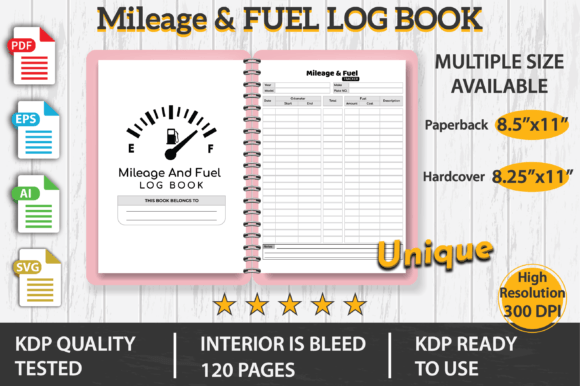
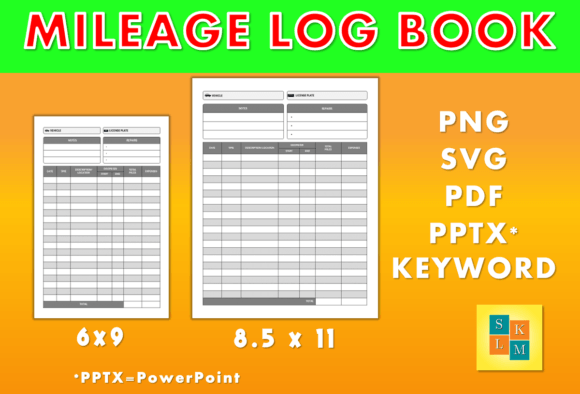
The first impression? Clean, grounded, and gently professional. It leans into a warm, minimalist aesthetic—think soft charcoal lines, ample white space, subtle grid textures, and just enough visual rhythm to feel intentional without shouting. It doesn’t scream “cute” or “festive,” and that’s its strength. This is the kind of graphic design asset that attracts organized creatives: small business owners tracking studio commutes, makers managing craft fair travel, Etsy sellers calculating shipping mileage for tax prep—or even coaches and consultants bundling it into client-facing productivity kits. It feels like a tool that belongs beside your favorite leather journal, not buried in a digital folder.
In my current seasonal batch—custom mugs and tumbler wraps for spring markets—I’ve already used the Mileage Log Book layout as a base for two distinct applications. First, I extracted the clean header block (with its subtle line divider and balanced typography) and resized it into a 3.5" wide SVG for vinyl-cutting onto kraft paper gift tags. Second, I isolated the expense tracker section, converted it to a high-res PNG with transparent background, and layered it over a watercolor texture for printable wall art aimed at home-based service providers. Both worked seamlessly in Cricut Design Space and Silhouette Studio—no jagged edges, no stray anchor points.
Where this SVG design truly shines is in scalable, functional contexts: printable planner inserts (especially for hybrid digital-physical users), sublimation-ready dashboard pages for car-detailing side hustles, and as part of a larger design bundle themed around small business operations. I’ve paired it with script fonts for handwritten-style headers and clean sans serifs for data fields—both read beautifully when printed on matte sticker paper or heat-pressed onto cotton tote bags. It also holds up well in product mockups: placed on a laptop sleeve or notebook cover, it reads as intentional branding—not clipart.
That said, there are real limits to respect. Don’t push the Mileage Log Book into micro-sticker territory—anything under 1.25" starts losing legibility in the fine grid lines. Avoid stacking multiple layers of vinyl over it unless you’re using weeding tools with surgical precision; the spacing between columns isn’t generous enough for heavy layering. And while the PNG version has solid transparency, double-check how the gray tones render on dark substrates—some shades soften slightly on black tumblers or navy fabric, so test print before bulk production.
Here’s what I do before adding any digital product like this to my shop:
- Test the SVG in Cricut Design Space: I ungroup everything, check for hidden layers or compound paths, and run a “cut preview” at 4x scale to catch thin strokes or overlapping nodes.
- Preview the PNG at 300 DPI on screen and in print: I open it in Photoshop, zoom to 200%, and toggle between RGB and CMYK to spot unintended color shifts—especially important for sublimation design.
- Place it on real mockups: Not just stock templates—I use photos of my actual mugs, notebooks, and gift boxes. Lighting and material texture change how lines and contrast land.
- Resize intentionally: I keep three versions: full-page (for printable logs), half-page (for planner inserts), and cropped header-only (for stickers or packaging accents).
- Verify commercial license terms: Since this falls under Kdp Interiors and targets print-on-demand creators, I confirmed the license covers resale in physical and digital formats—including customer orders and craft fair sales.
This listing is built for practicality, not polish—and that’s exactly why it fits handmade workflows. Unlike ornate clipart packs that demand heavy editing, the Mileage Log Book arrives ready to adapt: simplify the layout for a single-page sticker sheet, extract icons for social media graphics, or combine sections into a printable “Small Business Roadmap” kit. I’ve already added it to my go-to folder for Etsy product development alongside my most-used script fonts and neutral-patterned backgrounds.
For crafters building consistent small business branding, assets like this are quiet power players. They don’t dominate your shop aesthetic—but they reinforce reliability, clarity, and attention to detail. When a customer sees a thoughtfully designed mileage tracker included with their custom planner set, they’re not just getting a logbook. They’re getting proof that you understand their workflow—and that builds trust faster than any banner sale.
If you sell printable designs, run a Cricut project studio, or manage a hybrid handmade + digital shop, the Mileage Log Book isn’t a “nice-to-have.” It’s infrastructure. The kind you install once, test thoroughly, and reach for every time you need clean, credible, commercially safe design assets that serve function *and* feeling—without demanding endless tweaking.