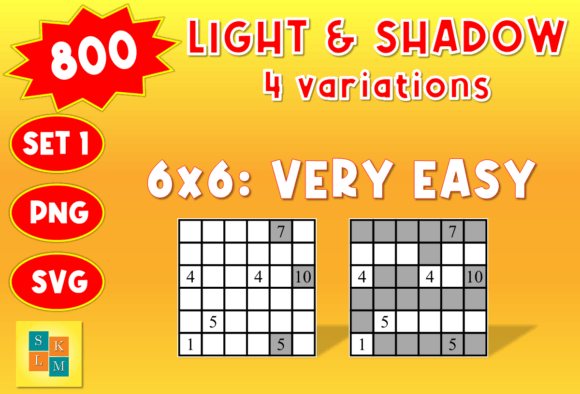
Light and Shadow Logic Puzzle
A Designer’s First Look: Clean, Clever, and Quietly Confident
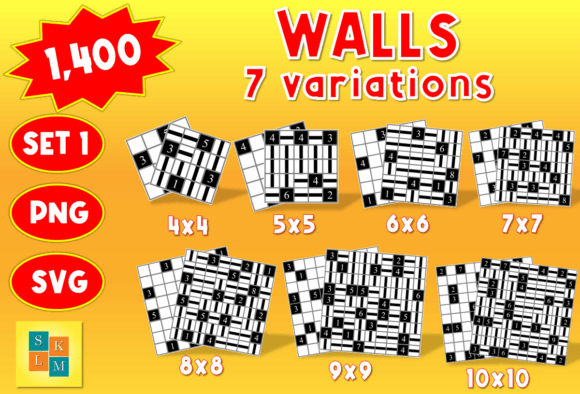
When I opened the Light and Shadow Logic Puzzle files, my first thought wasn’t “Oh, another puzzle graphic”—it was “This has presence.” The four grid sizes (6x6 through 12x12) aren’t just scaled versions; each feels intentionally composed—like a designer who understood how negative space breathes in embroidery. The lines are crisp but not rigid, the contrast is subtle yet legible, and the overall mood lands somewhere between minimalist modern and quietly intellectual. It doesn’t shout. It invites. That makes it unusually versatile—not for loud branding or playful kids’ wear, but for thoughtful handmade products where clarity and calm matter.
Where It Shines in Real Embroidery Projects
I tested the 8x8 variation on a natural linen tote bag—medium-weight, slightly textured—and it landed beautifully. The design read clearly at arm’s length, held up under casual handling, and didn’t overwhelm the fabric’s organic character. As a machine embroidery design, it’s forgiving: moderate stitch density, no ultra-fine serifs or hairline gaps that vanish under fill stitch. I also stitched the 10x10 version onto a soft cotton sweatshirt (light gray heather), using a light tear-away stabilizer—and the result looked intentional, not technical. No puckering, no thread nesting, no “digital artifact” feel.
It works especially well for boutique-style merchandise: embroidered pillow covers for a calming nursery, tea towels for a mindful kitchen brand, or baby onesies where simplicity reads as care. I even mocked it up as a small embroidered patch on a denim cap—clean edges, no distortion around the curve. For Etsy sellers or small shop owners building a cohesive line, this isn’t just a graphic—it’s a quiet signature. Customers notice when something feels *designed*, not dropped in.
Where to Proceed with Intention (Not Caution)
This isn’t a “use anywhere” design—but that’s a strength, not a flaw. On thin or stretchy fabrics (like lightweight jersey or ribbed knit), the clean geometry can look brittle if stabilizer isn’t precisely matched. I’d avoid it on curved surfaces like baseball caps *unless* you’re using the 6x6 version with careful digitizing adjustments. Dense fill areas in the 12x12 variant need extra attention on dark fabric—test thread colors early. Black-on-charcoal can mute contrast; cream-on-navy gives more definition without looking washed out.
Also: don’t force it into tiny spaces. While the 6x6 fits neatly in a 4-inch hoop, its logic-puzzle nature relies on spatial reading—so it loses impact below ~2.5 inches wide. And skip it for high-wash items (like baby bibs or dish towels) unless you confirm thread durability and stabilizer washout behavior. It’s built for longevity, not abrasion resistance.
Design Integrity Meets Customer Trust
What surprised me most was how much the Light and Shadow Logic Puzzle elevates perceived value—not through flash, but through restraint. When customers see it on a handmade product, they don’t think “puzzle game.” They think “thoughtful,” “intentional,” “curated.” That builds trust faster than ornate flourishes ever could. For craft businesses selling personalized gifts or wedding favors, that subtlety reads as sophistication. For apparel decorators adding quiet branding to staff uniforms or boutique merch, it signals confidence in the brand’s voice—not the logo’s volume.
And because it’s rooted in logic-grid structure, it scales cleanly across formats: same design used as a printed mockup, an embroidered patch, and a digital preview on your Etsy listing. That consistency strengthens brand recognition without repeating slogans or mascots.
Practical Notes Every Embroidery Designer Should Check
- Always test on scrap fabric first—especially with your exact stabilizer and thread combo. Linen behaves differently than cotton poplin.
- Review stitch density before scaling up. The 12x12 version adds visual weight, but verify it won’t cause fabric distortion on delicate weaves.
- Confirm hoop size compatibility. The 6x6 and 8x8 fit standard 4” and 5” hoops comfortably; 10x10 and 12x12 may require 6”+ depending on your machine.
- Inspect small details in black-and-white mockups. What reads as elegant contrast on screen can blur in monochrome stitching.
- Compare performance on light vs. dark backgrounds—not just for thread choice, but for how the “shadow” areas land visually.
- Use proper stabilizer: light tear-away for stable wovens, cut-away for knits or stretchy blends.
- Check licensing terms before selling finished items or bundling the digital embroidery file into kits—Kdp Interiors lists this under Graphics, but commercial use rights must be confirmed directly.
Final Thought: A Design That Earns Its Place
The Light and Shadow Logic Puzzle isn’t flashy. It won’t trend on TikTok. But in my 12 years of designing for craft businesses, I’ve learned that the most reliable assets are the ones that work quietly, consistently, and respectfully—with the fabric, the machine, and the customer’s eye. This is one of them. Whether you’re stitching a custom apron for a local bakery, creating holiday embroidery for a mindful gift shop, or building a line of printable mockups for fellow designers, it delivers clarity without compromise. It’s not just a puzzle—it’s a design decision with weight.