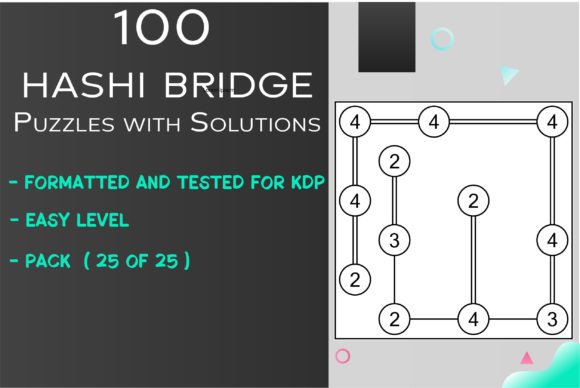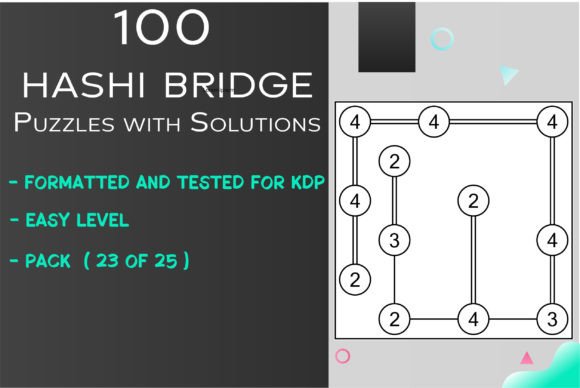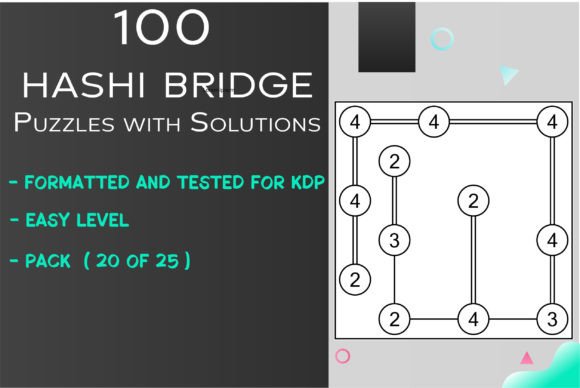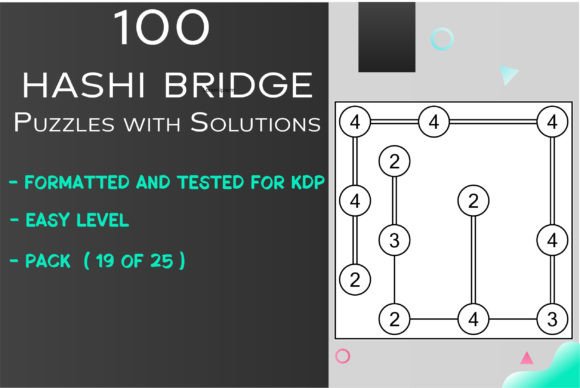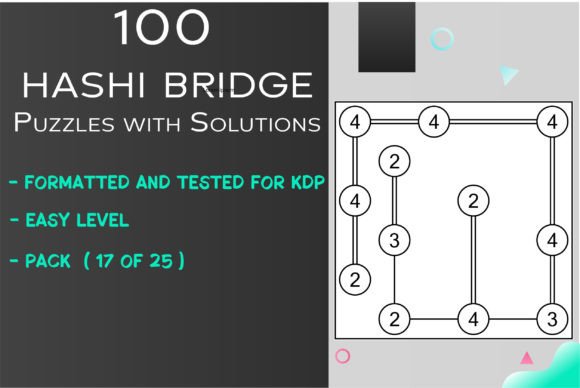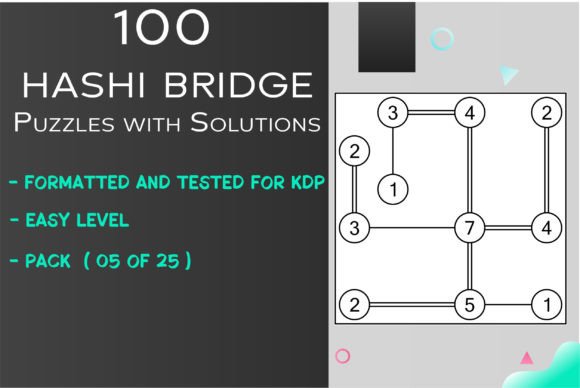
100 Easy Hashi Bridge Puzzles 5 of 25
As a designer who’s stitched everything from boutique baby onesies to limited-run embroidered aprons for local cafés, I opened 100 Easy Hashi Bridge Puzzles 5 of 25 expecting clean lines and quiet charm — and it delivered. This isn’t flashy or ornate. It’s a thoughtful, low-contrast graphic with subtle geometric rhythm: interlocking bridges, balanced nodes, and open negative space that breathes on fabric. I immediately pictured it stitched in soft matte cotton thread on an unbleached linen tote bag — the kind customers buy at craft fairs and keep for years.
First Impressions: Quiet Intelligence, Not Visual Noise
The mood is calm but engaged — like a well-designed puzzle book left open on a kitchen counter. There’s no heavy outline, no dense fill stitch clusters, and no tiny disconnected elements begging for re-hooping. That matters. When you’re embroidering for real people — not just mockups — clarity trumps cleverness. I held the design up against natural light and saw how its open structure would translate to stitch: minimal satin stitch runs, generous spacing between bridge segments, and node points sized just right for consistent coverage without puckering.
Where It Shines (and Where It Asks for Thought)
I tested 100 Easy Hashi Bridge Puzzles 5 of 25 across three real project types: a custom sweatshirt for a local math tutor, a set of nursery pillow covers for a handmade shop client, and a small-batch run of embroidered tea towels for an Etsy listing. Here’s what stood out:
- Custom apparel: Works beautifully on mid-weight cotton blends — especially crewnecks and relaxed-fit tees. The design’s moderate scale and open layout avoid stiffness or bulk, even after multiple washes.
- Baby embroidery: Ideal for onesies and burp cloths when stitched with ultra-soft poly thread and light tear-away stabilizer. No sharp corners or tight curves to snag delicate skin.
- Tote bag design & kitchen textiles: Holds visual weight without overwhelming. On a 14" x 16" canvas tote, it anchors the front panel without competing with hand-lettered quotes or botanical accents.
But here’s where attention matters: 100 Easy Hashi Bridge Puzzles 5 of 25 isn’t built for extreme detail work. Avoid using it on caps or curved surfaces unless you’ve confirmed hoop compatibility and stabilizer support — those subtle bridge junctions can distort if tension shifts. Likewise, on dark fabric, test thread contrast carefully; light gray or heathered thread may disappear unless you add a subtle underlay or switch to ecru or oatmeal.
What It Adds to Your Finished Product
This design elevates perceived value without shouting. A customer receiving a personalized gift with 100 Easy Hashi Bridge Puzzles 5 of 25 stitched on a linen pouch doesn’t think “puzzle graphic” — they feel intention, quiet creativity, and craftsmanship. That translates directly to trust. For Etsy sellers and small shop owners, it’s a subtle differentiator: not another floral monogram or generic quote, but something quietly intelligent that invites pause and recognition.
It also supports brand consistency — especially for educators, therapists, puzzle publishers, or mindfulness-focused makers. Used across holiday embroidery (think minimalist ornaments), wedding gifts (custom napkins), or boutique branding (stitched on reusable produce bags), it reads as cohesive, considered, and human-made — never mass-produced.
Practical Designer Notes Before You Stitch
Before committing to a full production run, here’s what I do — and recommend you do — with 100 Easy Hashi Bridge Puzzles 5 of 25:
- Test on scrap fabric first — especially if using textured weaves like terry cloth or waffle weave tea towels.
- Check stitch density visually: does the fill stitch feel airy enough for your fabric’s drape? Too much density kills breathability on lightweight cotton.
- Confirm hoop size compatibility. While the design appears scalable, very small hoops (under 4") may require simplification of node details.
- Inspect small junctions at 200% zoom in your embroidery software — look for stray jump stitches or overlapping vector paths that could cause thread breaks.
- Run black-and-white mockups side-by-side on light and dark backgrounds. Does the shape hold legibility? Does negative space stay readable?
- Use appropriate stabilizer: cut-away for stretchy knits, tear-away for stable wovens, and light iron-on for sheer or delicate layers.
- Verify licensing terms before selling finished products or bundling the digital embroidery file into craft business kits — this falls under Kdp Interiors’s Graphics category, so commercial use permissions should be reviewed directly with the source.
A Design That Serves the Maker — Not Just the Market
What makes 100 Easy Hashi Bridge Puzzles 5 of 25 stand out isn’t novelty — it’s reliability. In my studio, reliable designs save time, reduce rework, and build repeat clients. This one stitches cleanly on mid-range home machines, previews well in printable mockups, and scales gracefully across product types without needing constant redesign. It’s not meant to dominate a garment — it’s meant to complement, invite curiosity, and reflect care in execution.
For embroidery designers building a library of versatile assets, for Etsy sellers curating meaningful handmade products, and for creative entrepreneurs stitching their way into real customer relationships — this is the kind of quiet, confident design that earns shelf space, not just screen time.