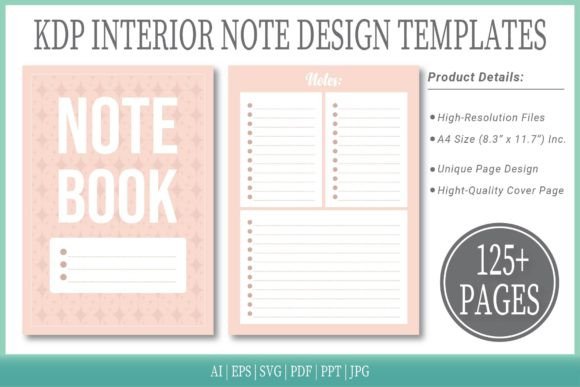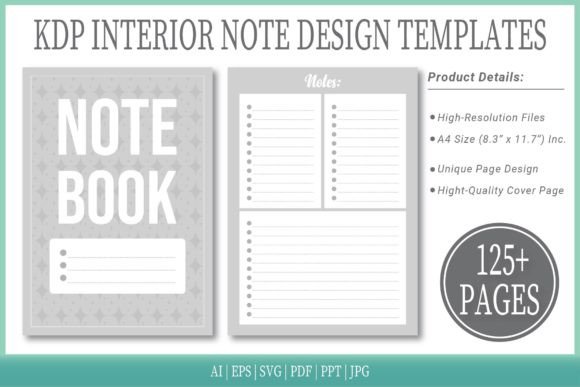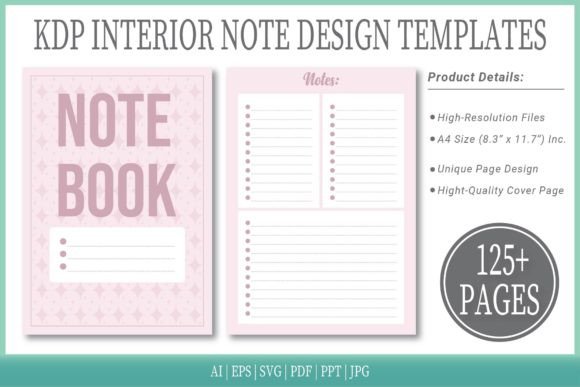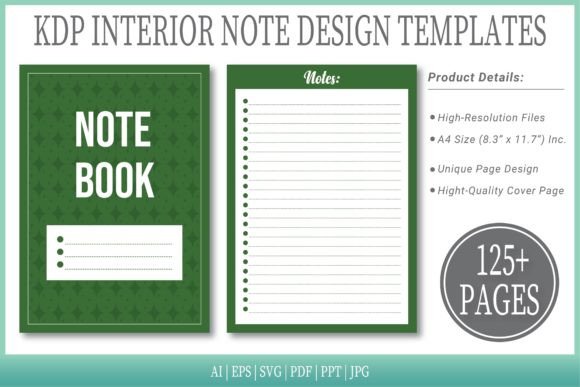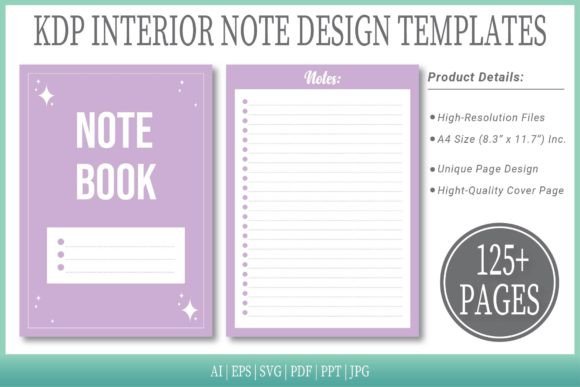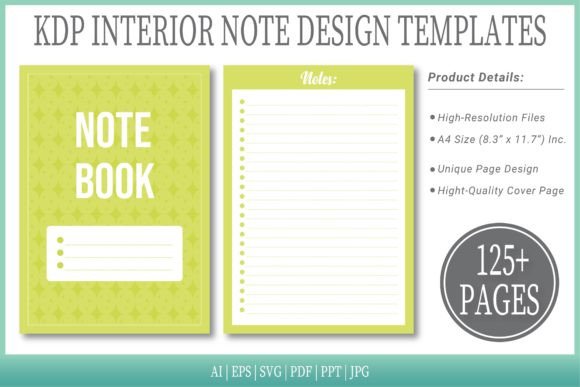
Straw Notepad Templates: Graphics for KDP Interiors
As a graphic designer who’s built brand identities for handmade businesses, seasonal Etsy launches, and boutique print-on-demand lines, I recently evaluated Straw Notepad Templates for a real client project: a spring-themed stationery line targeting eco-conscious moms and small-batch crafters. The first impression? Warm, tactile, and quietly intentional — not flashy, but full of grounded charm. The straw texture evokes natural fiber, hand-woven paper, and artisanal warmth. It’s not minimalist, nor is it maximalist — it sits in that sweet spot of modern design with organic soul, making it ideal for clients who want authenticity without sacrificing polish.
A Mood That Builds Trust Before the First Word
This isn’t just decorative clipart — it’s a graphic design asset that sets tone before any copy appears. The subtle grain, soft edges, and earthy tonal range immediately signal sustainability, care, and human-scale craftsmanship. For my client’s “Root & Rise” notepad collection, Straw Notepad Templates became the visual anchor — informing color palettes (oat, clay, sage), typography pairings (a sturdy sans serif for headers, a gentle script for quotes), and even packaging photography direction. It didn’t shout; it whispered consistency across every touchpoint.
Where It Shines in Real Client Work
In practice, Straw Notepad Templates excels where warmth and approachability matter most:
- Product mockups — layered over kraft paper or linen backgrounds, it adds instant texture and realism to Amazon KDP interiors and Etsy product previews;
- Packaging design — used as a border element on sticker sheets, tote bag labels, or gift box liners, it reinforces handmade business values without competing with logo or product name;
- Social media graphics — scaled as a background for Instagram carousels or Pinterest pins, it creates cohesion across a campaign while keeping text highly legible when paired with high-contrast fonts;
- Printable design — its vector format (AI and EPS) allows seamless resizing for wall art, planner inserts, or workshop handouts without pixelation;
- Cricut projects — clean vector paths cut precisely on cardstock or vinyl, making it perfect for custom notepad covers or themed event signage.
It also performs well as a commercial design layer in Canva templates, editorial layouts, and digital ads — especially when the goal is emotional resonance over clinical precision.
Where Caution Is Needed
That said, this asset isn’t universally flexible. In logo design or primary brand identity systems, its texture can dilute clarity at small sizes or on complex backgrounds. I tested it over watercolor overlays and busy patterns — contrast dropped, hierarchy blurred. It’s not ideal for:
- Ultra-minimalist branding (think tech startups or luxury skincare);
- Corporate presentations or formal reports requiring sharp neutrality;
- Small-format applications like app icons or favicon-sized elements;
- Low-contrast combinations (e.g., light straw on off-white), where readability suffers without careful font weight and spacing adjustments.
Design Judgment in Action: What I Tested
Before clearing Straw Notepad Templates for client use, I ran these practical checks:
- Black-and-white test: Printed grayscale versions — the texture held up, confirming strong tonal separation for monochrome printing;
- Background contrast check: Previewed on light, dark, and mid-tone surfaces — works best on solid, uncluttered backgrounds;
- Scale responsiveness: Zoomed from 10% to 300% in Illustrator — no fraying, no distortion, thanks to true vector construction;
- Mockup realism: Placed over real notebook photos — enhanced perceived quality far more than flat white or gradient backdrops;
- Font compatibility: Paired with serif (Merriweather), sans serif (Inter), script (Dancing Script), and display (Bebas Neue) — strongest harmony with warm, medium-weight typefaces;
- Licensing verification: Confirmed commercial license covers resale in KDP interiors, printable design bundles, and physical products — critical for client deliverables.
Why It Fits the Creative Marketplace Right Now
In today’s landscape — where audiences scroll past sterile visuals in under two seconds — Straw Notepad Templates delivers quiet differentiation. It supports small business branding not by shouting “handmade,” but by embodying it through texture, restraint, and tactility. As a digital product, it bridges analog appeal with digital utility: editable vectors mean it adapts to t-shirt design, sublimation design, sticker design, and web design alike. For designers sourcing design assets for clients launching printables, crafting Canva template libraries, or building cohesive KDP interiors, this is more than clipart — it’s a mood-setting tool with commercial-grade flexibility.
Final Verdict: A Thoughtful Asset, Not a Shortcut
Straw Notepad Templates won’t replace thoughtful brand strategy — but it elevates execution. When your client needs to feel grounded, genuine, and gently elevated, this creative design asset delivers. Used intentionally — with attention to contrast, scale, and context — it strengthens visual hierarchy, deepens emotional appeal, and builds visual trust without saying a word. For anyone building print-on-demand collections, Etsy product suites, or seasonal marketing visuals, it’s a quietly powerful addition to the toolkit — especially when paired with strong typography and intentional whitespace.