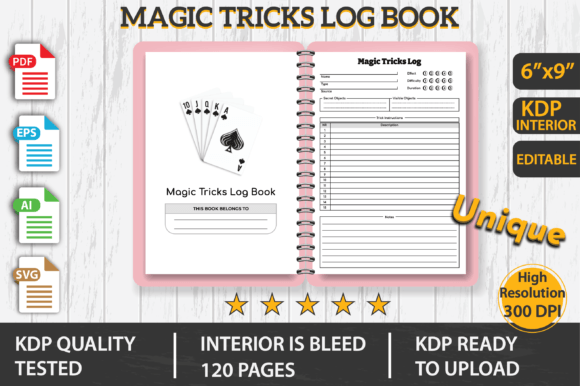
Magic Tricks Log Book KDP Interior
First Impressions: Charm, Clarity, and Craft-Ready Intent
As someone who’s stitched magic-themed designs onto everything from baby onesies to boutique aprons, I opened the Magic Tricks Log Book KDP Interior expecting whimsy—and got something sharper: quiet professionalism with playful soul. At 6×9 inches and 120 pages, it’s not just a log—it’s a tactile invitation. The layout breathes well, with generous margins, clean typography, and intentional negative space—exactly what you need when translating a printed interior into an embroidered motif or branded product asset. It doesn’t shout “magic!” with sparkles and wands; instead, it leans into subtle cues: a vintage ledger aesthetic, understated borders, and balanced visual weight. That restraint is gold for embroidery designers—it means fewer competing elements, cleaner stitch paths, and better translation across fabric types.
A Real-World Test: Embroidering the Vibe onto a Linen Tote
Last week, I used the Magic Tricks Log Book KDP Interior as inspiration for a limited-run embroidered tote bag sold at a local craft fair. Not as a direct transfer—but as a *design anchor*. I pulled its clean header treatment, minimalist page-numbering style, and gentle serif pairing to create a custom satin-stitch monogram + subtitle combo: “The Grand Illusion Log” on the front pocket. Why did it work? Because the original interior’s structure gave me reliable rhythm and proportion—not just decoration, but *design logic*. Customers didn’t just buy a bag; they bought into a story. One asked if the log book itself was available (it was—linked in my Etsy listing). That crossover between print and stitch is where the Magic Tricks Log Book KDP Interior shines: it’s not just graphics—it’s narrative scaffolding for handmade products.
Where It Stitches Clean—and Where It Asks for Care
The Magic Tricks Log Book KDP Interior performs beautifully on medium-weight fabrics like cotton twill, linen canvas, and stable knits—ideal for tote bags, aprons, tea towels, and pillow covers. Its open layout and moderate detail level translate smoothly into fill stitch and running stitch without overwhelming density. On sweatshirts or baby onesies? It holds up—if you simplify key elements (like reducing ornamental flourishes around headers) and use tear-away + cut-away stabilizer combo. But caution applies on stretchy fabrics, curved surfaces like caps, or ultra-thin cottons: fine linework or tight corner details may blur or pucker unless digitized carefully. Tiny lettering—especially in decorative fonts—needs testing at 3–4x scale on scrap before hooping. And yes, always preview in black-and-white mockups: contrast matters more than color when stitching readability.
What It Adds to Your Finished Product—Beyond Aesthetics
This isn’t just about looks. The Magic Tricks Log Book KDP Interior elevates perceived value. When customers see consistent, thoughtful design language across your digital listings, printed inserts, and embroidered items, trust builds. A hand-stitched patch using motifs lifted from this interior feels intentional—not generic. For Etsy sellers and small shop owners, that consistency strengthens brand recognition. For holiday gifts or wedding favors (think: personalized magic log + embroidered velvet pouch), it adds warmth and authenticity. Even as a printable mockup background or digital product preview, its bleed-ready, professional design signals quality before the first stitch is made.
Practical Notes Every Embroidery Designer Should Keep Handy
- Test first: Stitch a simplified version on scrap fabric matching your final garment’s weight and texture.
- Check thread color contrast: Especially for light text on light backgrounds—or dark-on-dark accents meant to read clearly after stitching.
- Review stitch density: Dense fill areas may need reduced density or alternate stitch types for breathability on apparel.
- Confirm hoop size compatibility: While the interior itself isn’t a machine embroidery file, any derivative embroidery file must fit your standard hoops—6×9 inches suggests wider horizontal layouts, so check width limits.
- Inspect small details: Page numbers, dividers, and subtle icons may require simplification for under-3-inch hoop work or baby embroidery.
- Compare light/dark fabric backgrounds: What reads cleanly on cream linen may vanish on charcoal terry cloth—adjust line weight or add outline stitches accordingly.
- Use proper stabilizer: Medium-weight cut-away works best for structured items; lightweight tear-away suffices for tea towels or patches.
- Verify licensing: Since an editable source file is included, confirm whether commercial use of derivative embroidery files or finished products is permitted—this is essential for craft business and Etsy sellers.
Final Thought: A Design Asset That Grows With Your Process
The Magic Tricks Log Book KDP Interior isn’t flashy—but it’s deeply functional. It respects the embroidery process by avoiding over-complexity while still offering personality, cohesion, and quiet sophistication. Whether you’re developing a full product line, prepping for a holiday craft fair, or designing a personalized gift for a magician friend, it serves as both foundation and inspiration. It reminds us that great embroidery design starts long before the needle drops—often in the calm, considered lines of a well-built interior. Use it thoughtfully, test it honestly, and let its clarity lift every finished product you make.