Jigsaw Sudoku Graphics for Kdp Interiors
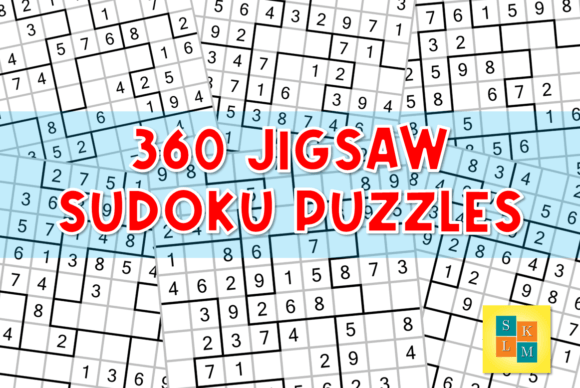
As a digital product creator who’s launched over 200 printable and SVG-based listings across Etsy, Creative Market, and Shopify—mostly in the puzzle, planner, and educational design space—I opened Jigsaw Sudoku expecting utility, not novelty. What I found was a quietly versatile graphic design asset: 360 unique jigsaw-style Sudoku puzzles, each rendered as scalable SVG files, with difficulty ranging from easy to hard. This listing is built for commercial use—not just as standalone puzzles, but as foundational design elements for print-on-demand, Canva templates, Cricut projects, and themed digital downloads.
First Impression: Clean, Functional, and Niche-Ready
The visual personality of Jigsaw Sudoku leans modern-minimalist with subtle organic edges—those interlocking jigsaw contours give it warmth without sacrificing clarity. It doesn’t scream “playful” or “cute,” nor does it feel sterile or corporate. Instead, it occupies a thoughtful middle ground: smart enough for educators and puzzle enthusiasts, elegant enough for home décor buyers browsing Kdp Interiors collections, and flexible enough for crafters building seasonal bundles. The audience? Think small business branding for therapy practices, homeschool co-ops, senior activity centers, boutique stationery shops, and mindfulness-focused content creators.
Where Jigsaw Sudoku Adds Real Product Value
This isn’t just another clipart pack—it’s a modular system. Each SVG puzzle works as a standalone printable design, but its true strength shines when repurposed:
- SVG products: Perfect for Cricut users cutting puzzle-themed planner stickers, wall decals, or nursery prints—especially when layered over neutral textured backgrounds.
- Printable design bundles: Pair with themed headers, answer keys, and progress trackers to build premium PDF puzzle books for Etsy or Teachers Pay Teachers.
- Sublimation design & mug design: The clean outlines and balanced negative space hold up well on ceramic mugs, tumblers, and tote bags—no pixelation, no clipping issues.
- Canva template kits: Drop individual puzzles into editable social media graphics, blog headers, or email newsletter banners—ideal for puzzle bloggers or brain-training coaches.
- Digital paper packs & scrapbooking kits: Use cropped puzzle sections as repeating patterns or frame them as decorative borders in printable planners.
- Greeting cards & invitation templates: Works beautifully for “brainy birthday,” “retirement puzzle party,” or “graduation logic challenge” themes—adds wit without clutter.
How It Elevates Product Presentation
In my shop prep workflow, I test every new graphic design asset across three key touchpoints: thumbnail visibility, mockup realism, and bundle cohesion. Jigsaw Sudoku performs consistently well in all three. Its strong visual hierarchy—clear grid structure, defined jigsaw boundaries, and balanced spacing—makes it instantly readable at small sizes. That means higher click-through potential on Etsy or Creative Fabrica. When placed in a product mockup (like a framed printable on a shelf or a puzzle book cover), it reads as intentional and professionally curated—not generic clipart. And because the 360 variations include consistent line weight and styling, bundling them into themed collections (“Spring Logic Bundle,” “Mindful Mondays Kit”) reinforces brand identity without extra design work.
Best Fit vs. Careful Use Scenarios
Jigsaw Sudoku excels in large-format applications: wall art prints, t-shirt graphics with centered layouts, sublimation wraps for wide mugs, and Canva-based social media templates where the puzzle acts as a focal point. It also supports visual storytelling—imagine a blog post titled “5 Ways to Boost Focus With Printable Puzzles,” using one SVG as an embedded illustration and another as a downloadable lead magnet.
Use it carefully in these cases:
- Tiny sticker designs—some jigsaw edges may lose definition below 1.5 inches wide.
- Dark background applications—verify contrast; some SVGs render with light gray strokes that fade on navy or charcoal.
- Cricut projects requiring ultra-precise cut lines—inspect anchor points before uploading; a few puzzles have minor overlapping paths that need cleanup in Design Space.
- Text-heavy templates—avoid placing body copy directly over puzzle grids unless you add a subtle semi-transparent overlay for readability.
Practical Seller Notes Before You List
Before adding Jigsaw Sudoku to your next digital download or POD collection, run these checks:
- Preview the SVGs in both white and dark mode mockups—some browsers default to thin stroke rendering that changes contrast.
- Test print one puzzle at actual size on your target paper stock (e.g., matte cardstock for greeting cards) to confirm line clarity and ink bleed.
- Open a random SVG in Inkscape or Illustrator and check for stray nodes or ungrouped layers—clean vector files save hours later.
- Verify PNG transparency if you’re bundling raster versions—some sellers convert these manually and miss anti-aliasing on jigsaw edges.
- Organize files logically for customers: group by difficulty (Easy / Medium / Hard), then number sequentially—this builds trust and reduces support requests.
- Pair with complementary fonts: a crisp sans serif (like Inter or Montserrat) for instructions, a warm script (like Quicksand or Pacifico) for titles, and a monospace font for answer keys.
- Confirm the commercial license explicitly permits finished goods—you’ll need this documented for Etsy’s policy compliance and POD platform uploads.
Bottom line: Jigsaw Sudoku isn’t flashy—but it’s dependable. For digital product creators building authority in the logic, learning, and mindful living niches, it’s a low-risk, high-flexibility graphic design asset. It supports real product workflows, scales cleanly across formats, and fits naturally into Kdp Interiors–aligned collections—whether you’re launching a printable puzzle subscription, designing sublimation-ready merchandise, or building Canva templates for educators. Just test it like a pro, not a passive downloader—and let the puzzles do the rest.