Drone Flight Logbook: Graphics for Kdp Interiors
First Impression: Clean, Niche-Confident, and Quietly Professional
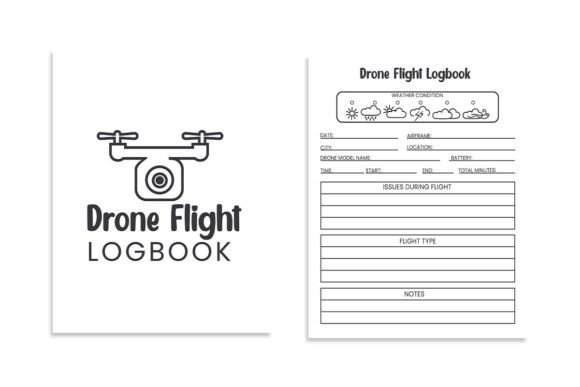
Opening the Drone Flight Logbook file felt like unboxing a well-curated tool—not flashy, but purpose-built. As a brand designer who reviews hundreds of graphic design assets each quarter, I immediately noticed its restrained visual language: subtle line weight, balanced negative space, and a functional yet human-centered layout. It doesn’t scream “drone tech”—instead, it whispers competence, safety, and intentionality. That’s rare. For drone operators, hobbyists, educators, or aerial service providers, this tone builds audience trust before a single word is read. It leans into lifestyle branding rather than industrial sterility—ideal for small business branding around outdoor education, real estate videography, or conservation storytelling.
A Real Campaign Fit: Refreshing a Content Kit for an Aerial Training Course
Last month, I helped a certified drone instructor launch a spring cohort of her online course, *SkySafe Pilot Prep*. She needed printable worksheets, Canva templates, and Instagram carousel graphics—all reinforcing credibility without overwhelming beginners. The Drone Flight Logbook became the anchor visual across three touchpoints: as a branded PDF download (printable design), as a layered SVG in her course welcome kit (digital product), and as a stylized header in her email sequence (marketing visuals). Its clean structure supported visual hierarchy instantly—no redesigning needed. Unlike generic clipart, it carried narrative weight: altitude, speed, and flight path weren’t just data points; they became visual metaphors for progression and mastery.
Where It Strengthens Brand Identity—Without Overpowering
The Drone Flight Logbook works beautifully inside established brand systems. Paired with a warm, earthy palette (think olive + charcoal), it supports small business branding for eco-drones or agritech startups. With navy + gold, it elevates premium service positioning—perfect for commercial inspection firms. It integrates cleanly into packaging design (e.g., printed inserts for drone maintenance kits) and product labels (as a minimalist icon on battery sleeves). On social media graphics, it adds texture without clutter—especially effective as a Pinterest pin background or Facebook ad overlay where clarity trumps decoration. As editorial design, it grounds blog posts about FAA compliance or flight planning with quiet authority.
Where It Builds Recognition—Not Just Decoration
This isn’t decorative illustration—it’s functional creative design. When used consistently across a digital product suite (e.g., all downloadable resources in a drone operator’s media kit), it becomes a subtle signature. Readers begin to associate that clean grid + flight-path motif with reliability. That’s stronger recognition than most logo designs achieve in early-stage brands. In email banners and website headers, it signals niche expertise at a glance—no jargon required. And because it’s built for readability (clear spacing, logical section breaks), it supports better engagement than dense infographics or overly stylized SVGs that sacrifice function.
Smart Uses Beyond the Obvious
- Hero graphics: Scaled elegantly for landing pages promoting drone insurance or pilot certification courses.
- Branded templates: Works as a base layer in Canva template packs for content creators selling flight planning tools.
- Packaging accents: Printed on kraft paper inserts for DIY drone repair kits—adds tactile professionalism.
- Content bundles: Embedded in lead magnets like “50 Flight Log Prompts” to boost perceived value.
- Decorative brand elements: Cropped and repeated as a subtle pattern in presentation decks or proposal PDFs.
Careful Use Zones: Context Is Everything
While versatile, the Drone Flight Logbook shouldn’t be forced where its strengths don’t align. Avoid using it in formal corporate branding (e.g., Fortune 500 annual reports)—its warmth reads too approachable. Skip dense information layouts: it’s not meant to carry 20+ data fields. Don’t shrink it below 200px wide—it loses legibility fast. Steer clear on low-contrast backgrounds (e.g., light gray text on beige); test contrast rigorously. And if your brand voice is ultra-minimalist (think monochrome sans-serif only), this asset may introduce unintended visual complexity. It also competes poorly in text-heavy ads—let it breathe as a supporting element, never the headline.
Brand Designer Notes: Test Before You Trust
Before deploying Drone Flight Logbook in client work or paid campaigns, run these checks:
- Test it against your full brand color palette—not just primary, but accent and neutral tones.
- Print it in black and white: does the hierarchy hold? Does line weight stay distinct?
- Drop it into real campaign mockups—email clients, Instagram Stories, PDF workbooks—to assess balance.
- Preview on mobile: does spacing collapse? Do flight-path lines blur at small scale?
- Compare side-by-side with top competitor visuals—is it distinctive enough to stand out in a crowded creative marketplace?
- Pair it with serif, sans serif, script, and display fonts: which pairing feels most authentic to your voice?
- Confirm commercial licensing: Kdp Interiors assets are typically royalty-free, but always verify usage rights for client projects or digital product resale.
Final Take: A Strategic Asset, Not Just a Graphic
In a sea of generic clipart and overdesigned SVGs, Drone Flight Logbook stands out by doing one thing exceptionally well: making technical logging feel human, intentional, and visually cohesive. It’s not just a printable design—it’s a quiet confidence-builder for audiences who value precision without pretension. For content marketers building trust through consistency, for designers crafting memorable campaign visuals, and for small business owners needing professional branding without custom design fees, this is more than a graphic design asset. It’s a ready-made piece of brand language—thoughtful, scalable, and quietly persuasive.