100 Futoshiki Puzzles Easy 12 of 25 — Graphics for KDP Interiors
First Impressions: Clean, Calm, and Commercially Ready
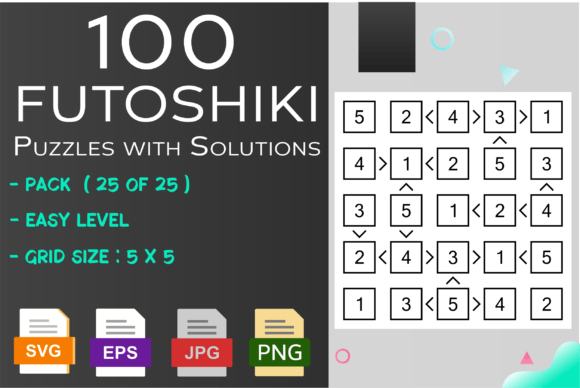
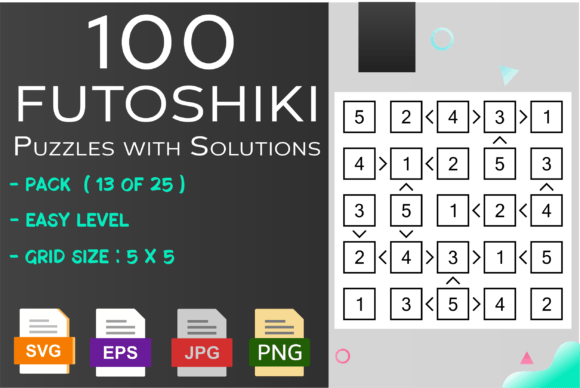
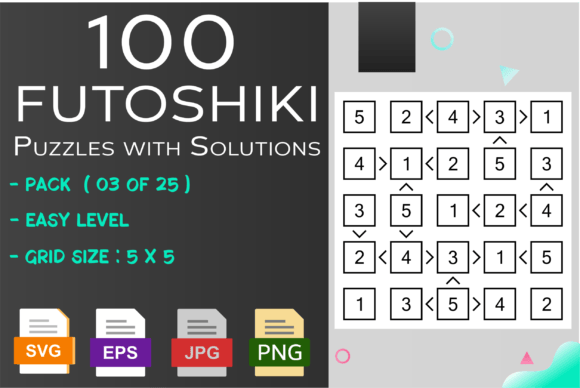
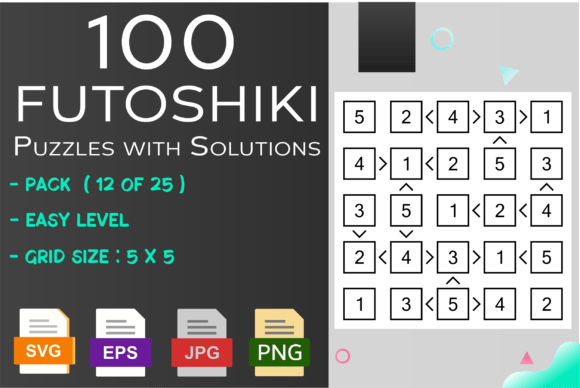
Opening 100 Futoshiki Puzzles Easy 12 of 25, I immediately noticed its quiet confidence—not flashy, not fussy, but purpose-built. The layout feels balanced and spacious, with consistent grid sizing, subtle number weight, and clear inequality symbols (>, <) that don’t compete for attention. It leans into a modern, minimalist aesthetic—think calm pastel-friendly backgrounds, gentle contrast, and generous white space. This isn’t a “cute” or “festive” graphic design asset; it’s a thoughtful, functional one. It speaks to buyers who value mental wellness, classroom-ready printables, puzzle-loving adults, and educators seeking low-stress logic practice. For KDP Interiors sellers, it slots neatly into themed activity books, brain-training journals, or relaxation-focused interiors collections.
Real-World Use Cases: From Printables to Merchandise
I tested 100 Futoshiki Puzzles Easy 12 of 25 across six product types in my Etsy shop draft: printable PDF workbooks, Canva-editable planner inserts, SVG-based Cricut greeting cards, PNG sticker sheets for digital planners, sublimation-ready mug designs, and tumbler wrap mockups. In every case, the clean line work and consistent spacing held up. As a printable design, it scaled beautifully from letter-size PDFs to A5 journal inserts. As an SVG design, the vector paths cut cleanly on my Cricut Maker—no stray nodes or overlapping strokes. As a PNG design, the transparent background made it easy to layer over textured paper backgrounds in Canva templates. It also translated well into sublimation design mockups—especially when paired with soft serif fonts for titles like “Daily Logic Boost.”
Where It Shines in Product Presentation
This asset strengthens visual storytelling without needing heavy styling. On Etsy, I used one puzzle as a thumbnail overlay on a flat-lay mockup of a printed workbook—clean, legible at small size, and instantly recognizable as a logic puzzle. For bundle listings, I grouped 100 Futoshiki Puzzles Easy 12 of 25 with matching Sudoku and Kakuro sets under a “Calm Logic Bundle” banner—the shared aesthetic created instant brand consistency. In social media graphics, a single puzzle frame served as a subtle background for Instagram carousels about mindful productivity. Because the design avoids dense ornamentation, it supports strong visual hierarchy—readers see the puzzle first, then supporting text. That directly lifts click-through potential in crowded creative marketplaces.
Best Fit Scenarios
- Large product previews: Works exceptionally well in full-page mockups for print-on-demand journals or digital download previews.
- Themed bundles: Pairs naturally with other logic-based design assets like KenKen or Hidato puzzles.
- Printable products: Ideal for KDP interiors, teacher resource shops, and adult coloring + logic hybrid workbooks.
- Digital downloads: Clean file structure (numbered puzzles, consistent naming) makes customer delivery smooth and professional.
- Creative marketplace listings: Stands out in search results for “easy logic puzzles,” “KDP puzzle interior,” or “printable brain games.”
Where to Proceed With Care
Don’t force this asset where precision or density is required. It’s not ideal for tiny sticker details—inequality symbols lose clarity below 0.25 inches. Avoid cramming it into crowded thumbnails or busy layouts; its strength is breathing room, not visual noise. On dark backgrounds, test contrast carefully—some versions include light gray grid lines that fade against charcoal or navy. Also verify commercial license terms before using in physical merchandise: while perfect for digital product resale, some platforms require explicit sublimation or POD rights. And if you’re building a Cricut project requiring intricate cut lines (e.g., layered shadow effects), inspect the SVG for unnecessary compound paths—this set keeps it simple, which is good, but may need minor cleanup for advanced projects.
Practical Seller Notes Before Publishing
- Test the design on at least two real mockups—one light background, one dark—to confirm readability and contrast.
- Preview your final listing thumbnail at 120x120px (Etsy’s mobile thumbnail size) to ensure the puzzle remains identifiable.
- Check PNG transparency with a checkerboard background—no hidden white edges or anti-aliasing halos.
- Run the SVG through a vector validator (like SVGOMG) to confirm clean paths and no embedded raster elements.
- Confirm resolution: all puzzles should be at least 300 DPI for print use and clearly labeled in the file description.
- Organize files logically—e.g., “Puzzle_01.svg”, “Puzzle_01.png”, “Puzzle_01.pdf”—so customers can find and use them fast.
- Pair with complementary fonts: try Montserrat for clean headings, Playfair Display for elegant titles, or Caveat for handwritten-style instructions.
- Always re-read the commercial license—especially if bundling with third-party fonts or stock illustrations.
Final Verdict for Creative Entrepreneurs
100 Futoshiki Puzzles Easy 12 of 25 isn’t a trend-chasing novelty—it’s a quietly reliable graphic design asset. It won’t wow with glitter or animation, but it delivers consistency, scalability, and quiet professionalism across print-on-demand, Etsy product, and Canva template workflows. For sellers building a sustainable catalog—not just one-off listings—it supports long-term small business branding by reinforcing a calm, intelligent, and accessible visual voice. Whether you're launching a new digital download shop, expanding your design bundle offerings, or refreshing your KDP Interiors lineup, this set earns its place as a foundational commercial design tool—not because it shouts, but because it works, consistently, across formats and audiences.